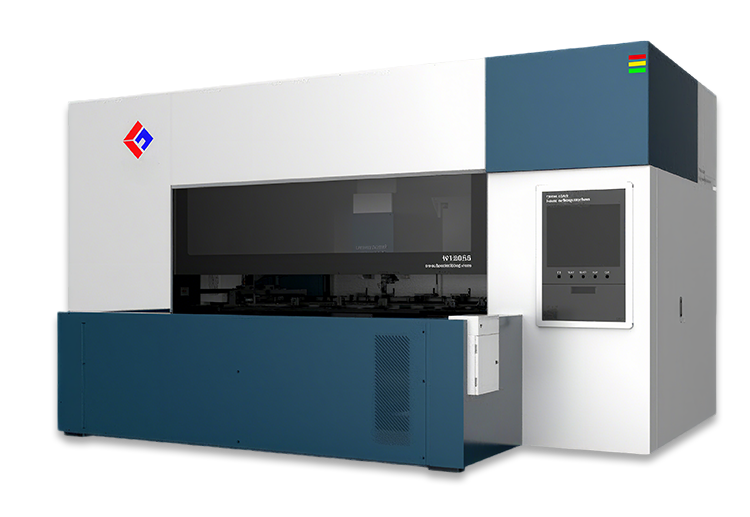
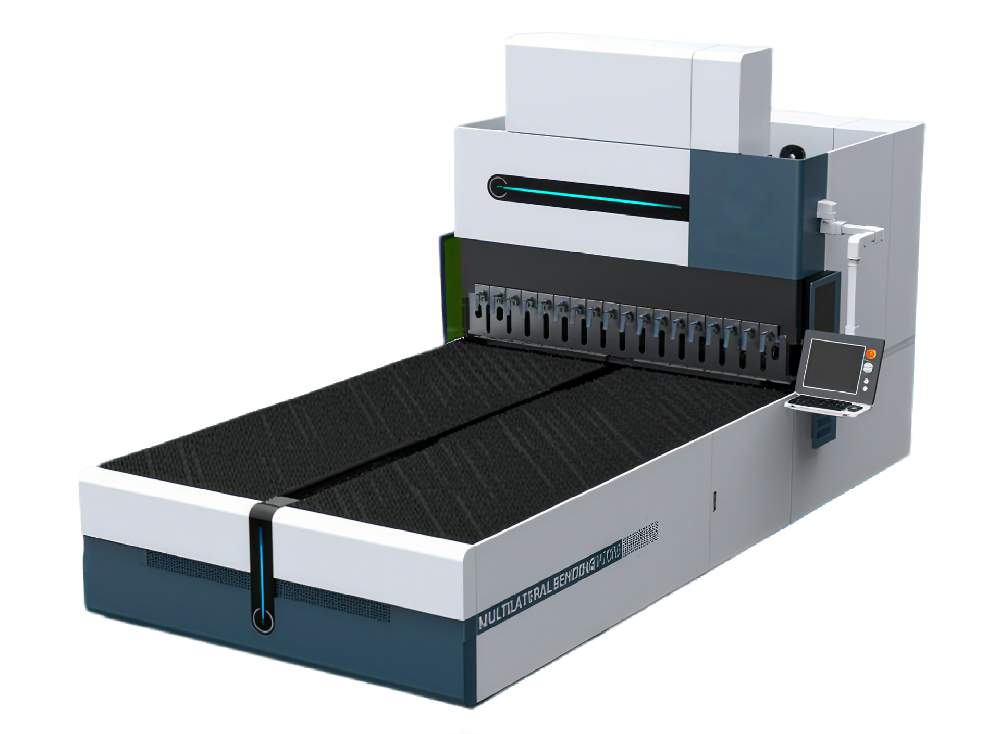
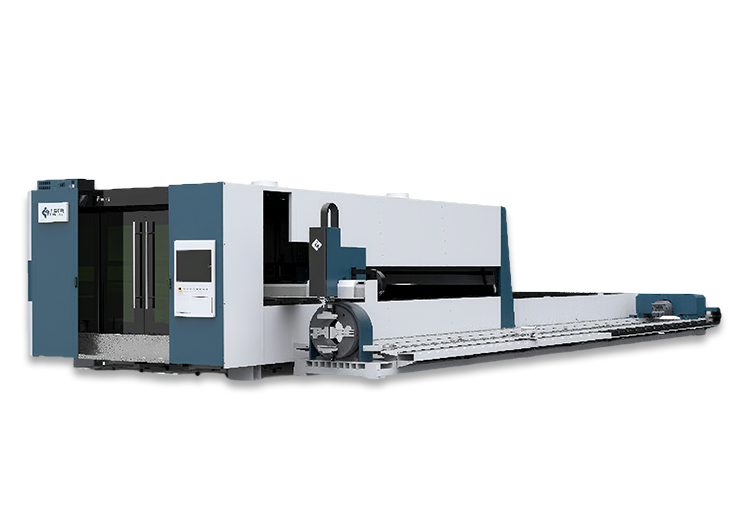
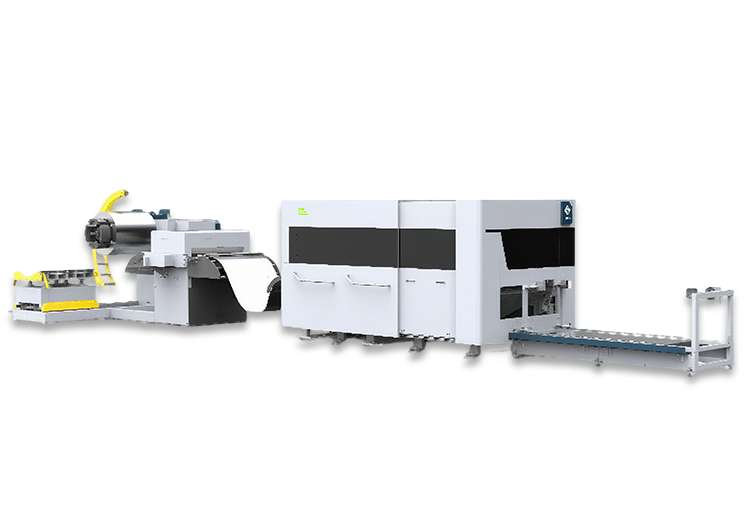
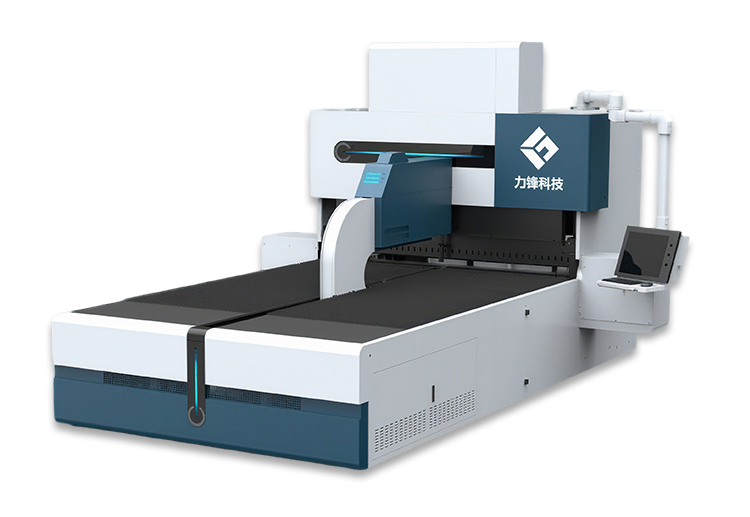
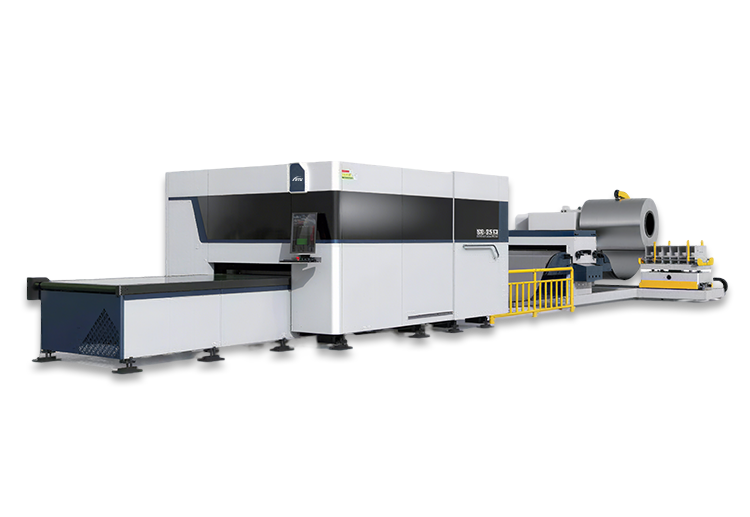
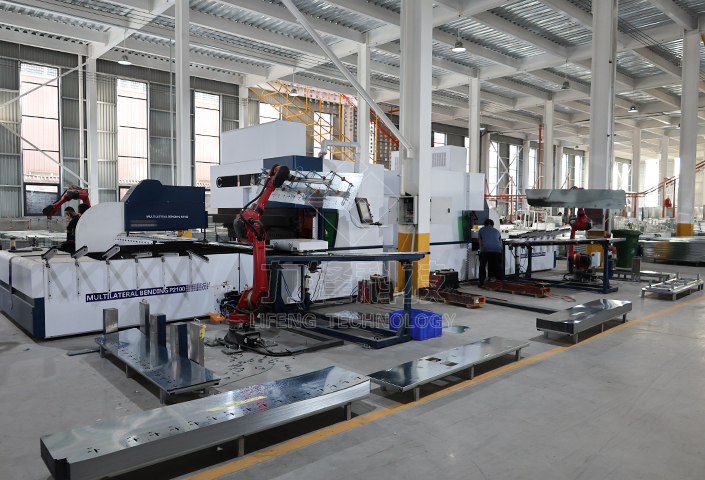
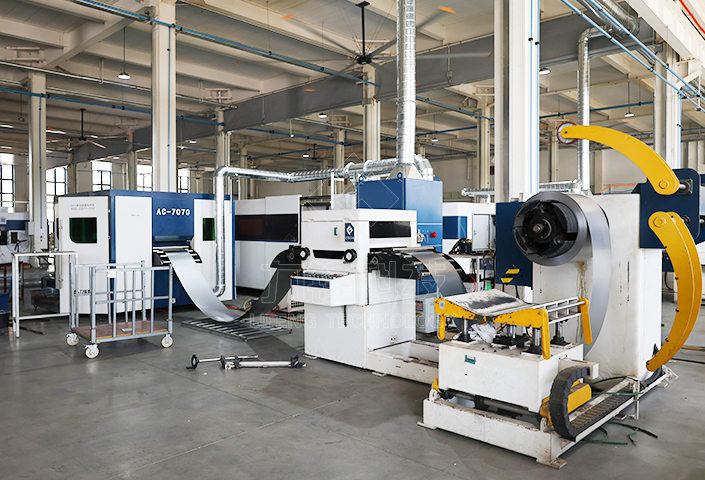
Vendors say a line replaces several workers. Buyers need a number they can defend to a finance committee, and that number is rarely the one in the brochure. Here is how to build it yourself in about an hour, using the same stations the cell in this clip runs: cutting, bending, welding, packing.
List the operations a finished file cabinet passes through. Typically blanking, deburring, bending, spot or laser welding, fitting hinges and locks, then packing. A four-station line covers blanking, bending, welding and stacking. It does not cover hinge fitting, lock assembly or final cartoning by hand. That distinction sets the honest scope of the saving.
A shift is eight paid hours and roughly 6.5 productive ones once breaks, changeovers and waiting are removed. Four operators across two shifts is 4 x 6.5 x 2, so 52 productive hours a day. If the line also runs through the night, add what it can actually produce in those hours, not another 52.
Nobody gets full output in month one. A realistic ramp is 60 percent of rated capacity in the first quarter, 80 percent in the second, and full output once the team has learned the changeover procedure and the maintenance routine. Any payback calculation that assumes day-one performance is fiction, and finance committees know it.
Automation creates work as well as removing it: one operator to supervise, a technician for programming and gripper changes, quality checks at first-off and hourly. Budget 30 to 40 percent of the removed hours back as these new tasks. The remaining 60 to 70 percent is the real labour saving, and it is still substantial when the line runs three shifts.
CNC positioning does not only replace hands; it removes variation. In a file cabinet line the payoff shows up as fewer rejects at the paint stage and fewer complaints about door gaps, which is hard to put in the labour column and easy to see in the warranty column. Ask for a first-pass yield figure from a line that is already running and compare it with your own.
Take a plant making 600 cabinets a month on two shifts with four operators on the four covered stations. Covered labour is 52 productive hours a day, about 1,150 a month. After automation, with one supervisor and a shared technician at roughly 0.3 of a person, the same volume needs around 340 hours: a saving near 800 hours a month, before counting the extra night-shift capacity the line makes possible.
At a fully loaded labour cost of USD 6 to 8 per hour in most Chinese provinces, that is USD 5,000 to 6,500 a month against a line investment usually between USD 150,000 and 400,000 depending on stations and robots. The arithmetic works, provided the part family stays stable enough to keep the line loaded, which is the assumption to test hardest before signing.
Stable blanks, a fixed pallet size, offline programming, and someone on staff who owns the cell. Carbon steel, stainless and thin gauge can all run on the same line once the grippers and the weld program are set up for them, and custom logo marking is usually just another station in the sequence. What the line will not do is compensate for a part list that changes every week.
Customized Production Line Design, Full-Lifecycle Service Guarantee From Solution to Implementation, Empowering Enterprises to Reduce Costs, Boost Efficiency, and Achieve Zero Risks!
Thank you for your interest in Lifeng Technology. If you would like to know more
about our sheet metal
process and equipment,
contact us to find out what we can do for your next project!

 lydia@lftk.cn