Most bending machine comparisons come down to a spec sheet: tonnage, bend length, axis count, price. Buyers who have already run an automated line know that those four numbers explain very little about what the machine will do on a Tuesday afternoon in month six.
Here is what we look at when a customer asks which machine belongs in their line — the same questions we ask ourselves when we build one.
A press brake rated at ±0.01 mm positioning accuracy can still produce parts that are half a degree out. The angle depends on material thickness tolerance, grain direction, tool wear and how the control compensates for springback. Ask for the angle tolerance on a real part made from your material, not the repeatability of the ram. Then ask how the machine measures: a control that reads actual bend angle and corrects on the next stroke is worth more than a tighter mechanical spec.
Hydraulic machines are still the default for thick plate and long bends, and will be for a long time. But for thin to medium sheet, servo electric drives have taken over the volume end of the market, and not out of fashion. An electric ram only draws power while it is moving, which cuts consumption on a typical duty cycle substantially against a hydraulic pump running continuously. Vendors in this segment now quote savings of roughly 25–30% on power, and the figure holds up when you measure a shift rather than a single stroke. Add lower oil and filter maintenance and the gap over five years is not small.
Automated lines fail at the backgauge more often than at the ram. If the gauge cannot position quickly and repeatably across the full bend length, the robot's cycle time evaporates while it waits. Look at the number of independently moving fingers, the stroke speed, and whether the fingers can retract to clear a flange that is already bent. For parts with four flanges, the sequence of gauge positions decides whether the part can be formed at all without a tooling change.
Any bend longer than about a metre deflects the ram and bed in the middle. Without compensation, the centre of the part comes out with a larger angle than the ends. Mechanical crowning is standard on better machines; hydraulic crowning adjusts under load. For anything destined for a visible panel or a door, test a full-length bend and measure the middle against the ends before you accept delivery.
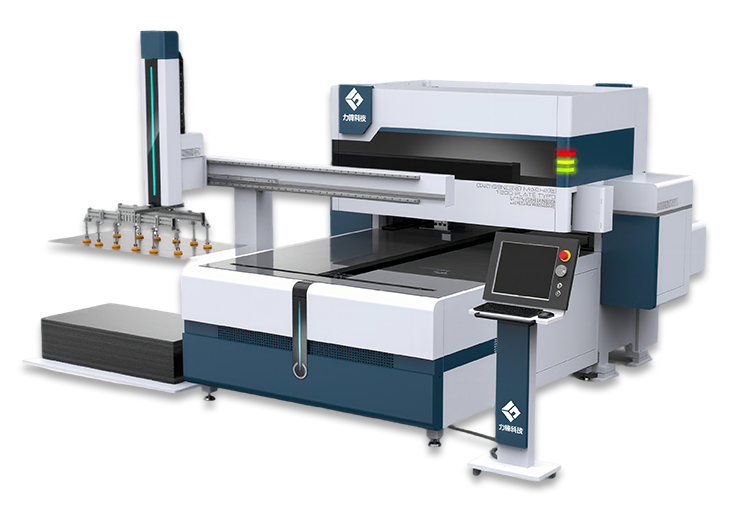
If the machine will run with a loading robot, three things need to be right from the start: the gripper interface, the safety handshake with the robot controller, and the height of the working plane. Retrofitting a robot to a brake laid out for manual operation usually means rebuilding the load station. When we build a bending center for automation, the locating pins, part-present sensors and control signals are on the drawing from the beginning.
A machine that stops on Monday and needs a part from overseas can idle a cell for a month. Before buying, ask where the spare parts warehouse is, how many of the valves, seals and servo drives are held locally, and what the typical lead time is for a controller board. The answer says more about total cost of ownership than the purchase price does.
The bending machine is usually the cheapest part of an automation project. Gripper, robot, safety system, programming software and commissioning together often cost more than the brake itself. That is the reason to choose the machine for how it behaves in a line, not for the lowest quote on its own.
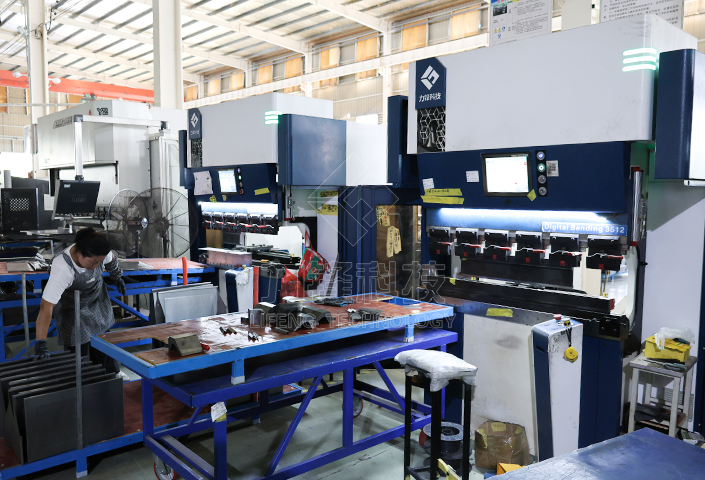
We build bending centers from 1,100 mm to 2,500 mm working length, in hydraulic and all-electric configurations, with the automation interface included rather than added later. Send us your part drawings and monthly volume and we will tell you which frame size and drive type covers the work without paying for capacity you will never use.
Customized Production Line Design, Full-Lifecycle Service Guarantee From Solution to Implementation, Empowering Enterprises to Reduce Costs, Boost Efficiency, and Achieve Zero Risks!
Thank you for your interest in Lifeng Technology. If you would like to know more
about our sheet metal
process and equipment,
contact us to find out what we can do for your next project!

 lydia@lftk.cn